If you have Type 4 hair, you’ve probably heard the same advice over and over again: “Just moisturize your hair more.”
Okay… but what happens when moisturizing your hair means spraying it with water every morning, adding leave-in conditioner, reapplying cream, refreshing your curls, detangling, separating your hair, and generally putting your hands in it every single day?
At some point, moisturizing your hair can start creating another problem: too much manipulation.
And if your goal is healthy, longer natural hair, especially Type 4 hair, you don’t necessarily need to do more to your hair. You may actually need to leave it alone more often.
The goal isn’t to keep your hair soaking wet or constantly coated in products. The goal is to create a routine that helps your hair hold onto moisture for longer periods of time while minimizing unnecessary manipulation.
Here’s how to keep Type 4 hair moisturized without constantly touching it.
Why Type 4 Hair Can Feel Dry So Quickly
Type 4 hair isn’t automatically “dry,” but its structure can make it more difficult for the natural oils produced by your scalp to travel down the hair shaft.
Coily and tightly curled strands have more bends and curves than straighter hair types. This can make it harder for sebum to distribute evenly from the scalp toward the ends.
Your ends are also the oldest part of your hair.
Think about it this way: the hair growing from your scalp is new. The ends have been through months or even years of washing, detangling, styling, friction, weather, heat, and everyday life.
So when your ends feel dry, that doesn’t necessarily mean your hair needs to be drenched in product every morning.
It may mean your routine needs to do a better job of retaining moisture and protecting your ends.
Moisture Isn’t Just About Adding Water
One of the biggest misconceptions about natural hair is that moisturizing means constantly adding more product.
But healthy moisture balance is about more than putting water or leave-in conditioner on your hair.
A simple way to think about it is:
Water provides moisture. Products can help your hair retain and manage that moisture. Your routine helps determine how long that moisture lasts.
If you moisturize your hair Monday morning and it feels completely dry by Tuesday, adding more product every day may not be the only answer.
You need to ask:
Why isn’t my hair staying moisturized?
Are you using too much heat?
Are you shampooing too frequently with a harsh cleanser?
Are you constantly manipulating your hair?
Are your ends exposed and rubbing against clothing?
Are you using a moisturizing product that isn’t actually working well for your hair?
Are you applying product to dry hair without adding enough water?
Sometimes the solution isn’t another product.
It’s changing what happens after you moisturize.
1. Start With Water
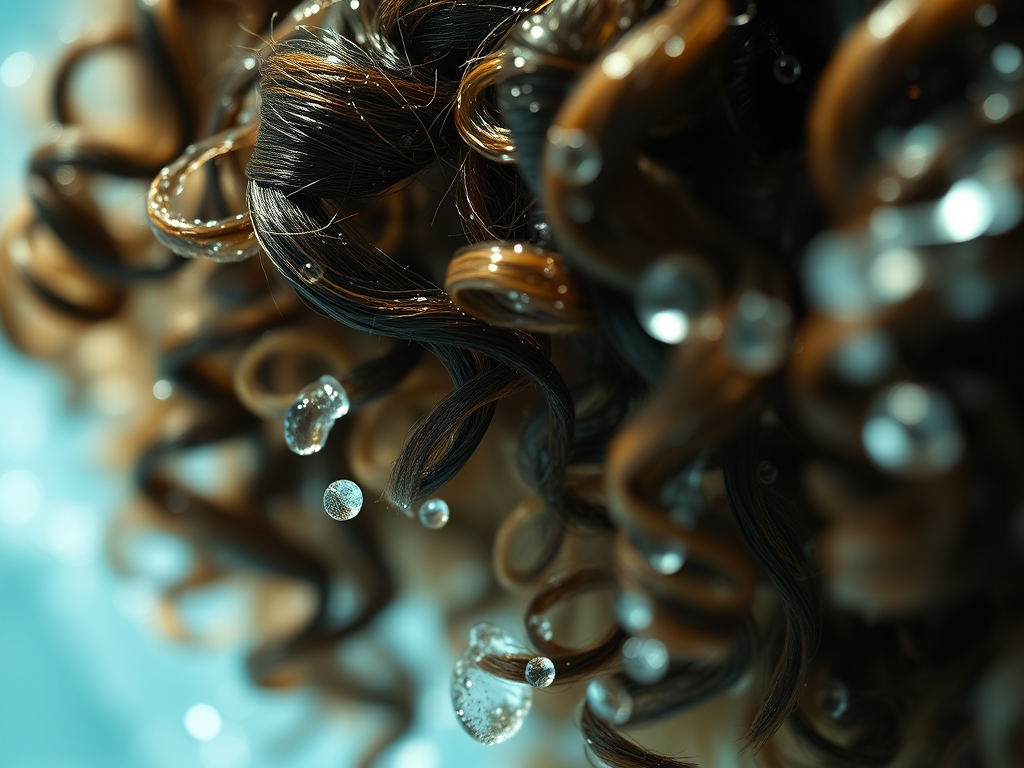
If you’re trying to moisturize Type 4 hair, don’t underestimate the simplest ingredient: water.
Water is what actually hydrates the hair fiber. Your leave-in conditioner, cream, butter, or oil isn’t a replacement for water.
That doesn’t mean you need to soak your hair every morning.
Instead, focus on applying your moisturizing products to damp or wet hair, depending on what works best for your hair.
For example, on wash day you might:
- Cleanse your scalp and hair.
- Condition thoroughly.
- Apply your leave-in conditioner to wet or damp hair.
- Add your styling product if needed.
- Allow your hair to dry completely.
- Leave it alone.
That last step matters.
Leave it alone.
You don’t need to keep refreshing your hair simply because it’s no longer dripping wet.
2. Stop Refreshing Your Hair Just Because It Looks Different
This is a big one.
Sometimes we confuse definition with moisture.
Your hair can lose some of its original definition without actually being unhealthy or dangerously dry.
Especially with Type 4 hair, your hair may change throughout the week. Your curls may become less defined. Your hair may shrink, expand, frizz, flatten, or simply look different.
That doesn’t automatically mean you need to refresh it.
If your hair feels soft, flexible, and manageable, you may not need to do anything.
Constantly spraying, combing, brushing, separating, fluffing, and restyling your hair can create unnecessary mechanical stress.
If you’re trying to retain length, that’s something to pay attention to.
Your hair doesn’t have to look freshly styled every day to be moisturized.
3. Moisturize in Sections on Wash Day
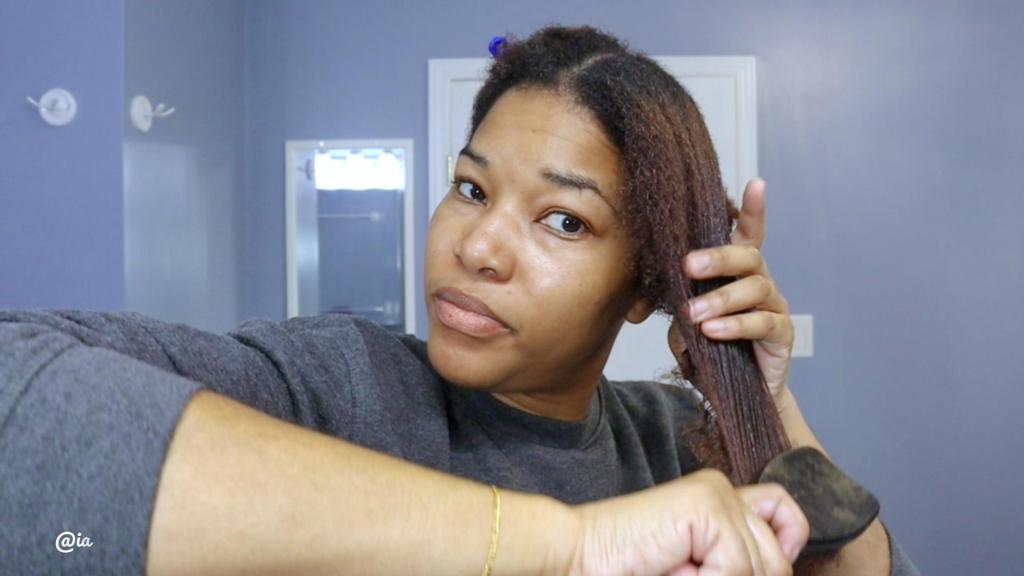
One of the easiest ways to reduce daily manipulation is to make your wash-day moisturizing routine count.
Instead of applying a tiny amount of product throughout the week, take your time during wash day.
Work in manageable sections.
Apply your leave-in conditioner thoroughly from roots to ends.
Pay special attention to your ends because they are the oldest and most vulnerable part of your hair.
Make sure the product is evenly distributed rather than sitting heavily on the surface of your hair.
Then style your hair in a way that doesn’t require you to constantly manipulate it afterward.
This is where your styling method can make a huge difference.
4. Use the LOC or LCO Method If It Actually Works for You
You’ve probably heard of the LOC and LCO methods.
LOC generally refers to:
Liquid → Oil → Cream
LCO refers to:
Liquid → Cream → Oil
The idea is to layer products to help moisturize and seal the hair.
But here’s the brutally honest part:
You don’t have to use the LOC or LCO method just because someone on the internet said you should.
If layering three or four products leaves your hair greasy, coated, stiff, or weighed down, it’s probably not helping.
Try different combinations and pay attention to how your hair behaves.
For some people, a leave-in conditioner followed by a styling cream is enough.
Someone else may need a leave-in, cream, and light oil.
Another person may find that a leave-in plus gel gives them the best results.
There is no prize for using the most products.
The goal is moisturized, manageable hair—not a shelf full of products.
5. Protect Your Hair at Night
Your nighttime routine can make a huge difference in how moisturized your hair feels the next morning.
Cotton pillowcases and bedding can create friction and may contribute to moisture loss and tangling.
Consider using a satin or silk bonnet, scarf, or pillowcase.
But here’s another important point:
Don’t just throw your hair into a tiny, tight bun every night.
That can create unnecessary tension around your hairline and repeated stress on the same areas.
Instead, choose a nighttime routine that protects your hair while keeping manipulation to a minimum.
Depending on your hairstyle, that could mean loosely sectioning your hair, putting it into a few loose twists, or using a bonnet that accommodates your hair without compressing it.
The less work you have to do to your hair every morning, the better.
6. Stop Detangling Your Hair Every Day
This deserves its own section because daily detangling is one of the easiest ways to accidentally over-manipulate Type 4 hair.
You don’t need to detangle your hair every morning just because you’re styling it.
If you’ve already detangled your hair on wash day and you’ve been wearing a low-manipulation style, leave it alone.
Every time you comb, brush, rake, separate, or aggressively pull through your strands, you’re creating mechanical stress.
Some manipulation is unavoidable.
The goal is to reduce unnecessary manipulation.
Save your major detangling session for wash day or whenever your hair genuinely needs it.
And when you do detangle, use plenty of slip and take your time.
7. Keep Your Ends Protected
If you’re trying to grow your Type 4 hair longer, this may be even more important than obsessing over how quickly your hair grows.
Your hair can be growing perfectly well at the scalp while you struggle to retain length at the ends.
That’s the difference between hair growth and length retention.
Your ends are older, more fragile, and more exposed to friction.
Constantly wearing your hair loose can mean your ends are rubbing against your clothes, scarves, coats, furniture, and everything else you come into contact with.
You don’t have to wear protective styles 24/7.
But incorporating lower-manipulation styles into your routine can help reduce the amount of daily wear and tear your ends experience.
Simple options include:
- Twists
- Braids
- Flat twists
- Buns with minimal tension
- Stretched styles
- Low-manipulation wash-and-go routines
The best style is the one that protects your hair without causing excessive tension.
8. Don’t Overdo Oils
Oil can be useful in a natural hair routine, but oil isn’t water.
This distinction matters.
If your hair is already dry, pouring oil onto it doesn’t magically hydrate it.
Instead, think of oil as something that can help with lubrication, softness, shine, and reducing friction depending on the product and how you use it.
If you like using oil, try applying a small amount after moisturizing rather than repeatedly adding more oil to increasingly dry hair.
And watch your scalp.
Your scalp doesn’t necessarily need to be coated in oil every day.
If you’re experiencing excessive flakes, itching, irritation, or other scalp concerns, adding more oil isn’t necessarily the solution.
9. Wash Your Hair Regularly
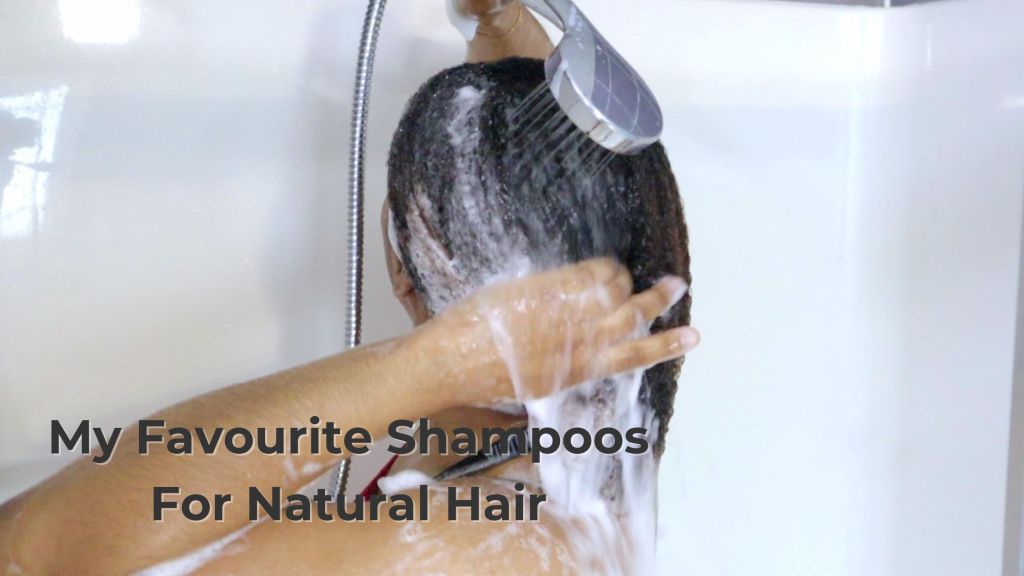
It might sound strange to talk about washing your hair when the goal is moisture retention, but a clean scalp and properly cleansed hair are part of a healthy routine.
Some people avoid washing because they’re afraid shampoo will dry out their Type 4 hair.
But stretching wash day too far can lead to significant product buildup, sweat, flakes, and an uncomfortable scalp.
The key is finding a cleansing routine that works for your scalp and hair.
Choose a cleanser that leaves your scalp clean without making your hair feel stripped.
Then follow with a conditioner that gives your hair enough slip and softness to make detangling easier.
And remember: clean hair can still be moisturized hair.
10. Be Careful With Heat
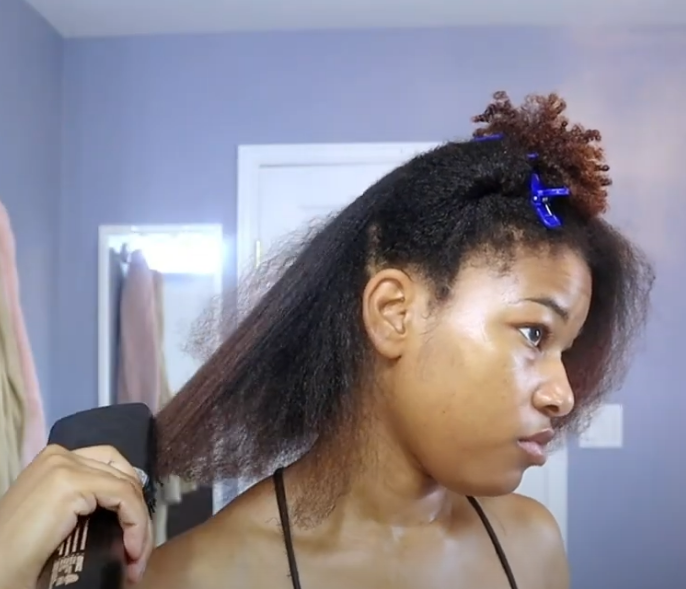
If you regularly straighten, blow-dry, or heat-style your Type 4 hair, heat can become an important part of the moisture conversation.
Heat isn’t automatically bad.
But excessive heat, high temperatures, repeated passes, and inadequate heat protection can contribute to dryness and damage.
If you use heat, focus on:
- Using heat protectant
- Using an appropriate temperature
- Limiting repeated passes
- Avoiding unnecessary touch-ups
- Giving your hair time between heat sessions
And don’t assume that adding more moisturizing products will undo heat damage.
Once the hair is damaged, you can’t moisturize it back to its original state.
You can improve how it feels and manage it carefully, but preventing unnecessary damage is much easier than trying to repair it later.
11. Choose Styles That Don’t Require Constant Fixing
This might be the biggest change you can make.
If you have to manipulate your hair every single morning to make it look acceptable, that’s probably not a low-manipulation style.
A good low-manipulation routine should make your life easier.
Maybe your wash-and-go lasts several days.
Maybe you put your hair into twists and wear them for a week.
Maybe you stretch your hair and wear it in a simple style.
Maybe you use a protective style for a period of time.
The exact style isn’t as important as the principle:
Do your hair once, then leave it alone.
12. Pay Attention to How Your Hair Actually Feels
Don’t let social media convince you that your hair is dry because it doesn’t look glossy enough.
Don’t let someone else’s routine convince you that you need ten products.
And don’t assume that your hair needs to feel coated with product to be moisturized.
Pay attention to your actual hair.
Does it feel soft?
Does it feel flexible?
Does it tangle excessively?
Does it break when you manipulate it?
Are your ends constantly splitting?
Does your hair feel dry shortly after moisturizing?
Those observations will tell you much more than a viral hair routine.
The Goal Is Moisture Retention, Not Constant Moisturizing
If you feel like you’re constantly moisturizing your Type 4 hair, it might be time to rethink your routine.
You shouldn’t have to completely redo your hair every morning just to keep it feeling soft.
A better routine may look like this:
Wash → condition → moisturize → style → protect → leave it alone.
Then, when your hair actually needs attention, give it attention.
Not because TikTok told you to refresh your curls.
Not because your hair doesn’t look exactly like it did on wash day.
And not because someone said Type 4 hair needs to be moisturized every day.
Your hair is allowed to look like hair.
Some frizz is okay.
Some shrinkage is okay.
A little less definition is okay.
The real goal is healthy hair that you can retain, not hair that looks freshly styled 24/7.
And if you’re trying to grow your Type 4 hair longer, remember this:
Your hair may not have a growth problem. You may have a length-retention problem.
Sometimes the best thing you can do for your hair is moisturize it well, protect it, and then…
stop touching it.


Leave a comment