Natural hair has always been versatile. From silk presses and stretched blowouts to braid prep and low-manipulation styling, heat styling can absolutely have a place in a healthy natural hair routine. Yet one of the biggest myths in the natural hair community is that heat itself is automatically damaging. The truth is this: heat is not the enemy of length retention — improper technique and lack of protection are.
When used correctly, heat can actually help natural hair thrive. The key is understanding how to protect your curls, coils, and kinks before applying heat, choosing the right tools, and maintaining a consistent healthy hair routine. If you want smoother blowouts, less breakage, easier detangling, and better length retention without compromising your curl pattern, heat protection is non-negotiable.
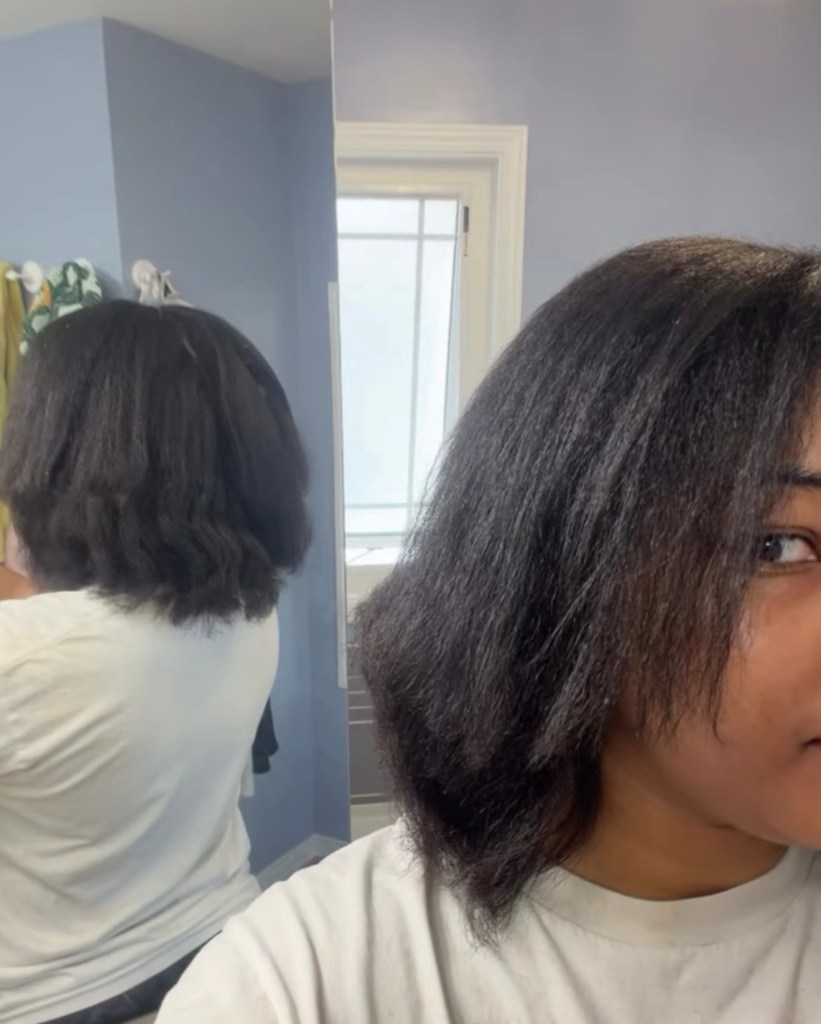
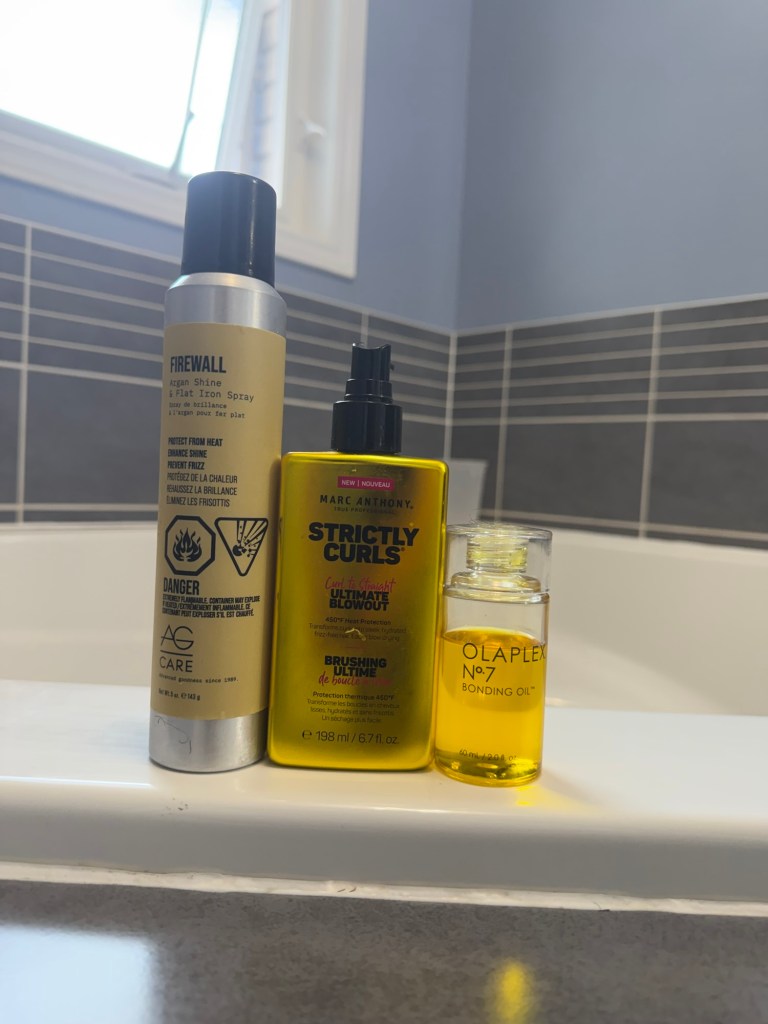
For my own natural hair routine, weekly stretching has helped reduce tangles, minimize single-strand knots, and make wash day much more manageable. One product that has completely changed the game for me is Marc Anthony Strictly Curls Ultimate Blowout Spray. It leaves my natural hair soft, smooth, and stretched without feeling stiff or greasy. I also layer additional protection using AG Care 1989 Heat Protectant and finish with the Olaplex No.7 Bonding Oil for added shine, softness, and protection.
Why Heat Protection Matters for Natural Hair
Natural hair is naturally more delicate because of its curls and coils. Every bend in the hair strand creates potential weak points where breakage can occur. Excessive heat without protection strips moisture from the hair shaft, weakens protein bonds, and can eventually lead to heat damage.
Heat protectants act as a barrier between your hair and hot tools. They help:
- Reduce moisture loss
- Minimize breakage
- Protect the hair cuticle
- Improve smoothness
- Reduce frizz
- Maintain elasticity
- Support length retention
Without a heat protectant, direct heat can quickly dry out natural hair, especially textured hair types that already struggle to retain moisture.
If you regularly blow dry your hair, diffuse curls, or use flat irons, using heat protection is not optional — it is necessary.
Heat Is Not the Enemy of Length Retention
Many naturals avoid heat completely because they fear losing their curl pattern. While overusing high temperatures absolutely can cause damage, healthy heat styling is possible with the right routine.
In fact, stretching natural hair with controlled heat can actually help with:
- Retaining length
- Reducing fairy knots
- Preventing excessive tangling
- Making detangling easier
- Lowering manipulation throughout the week
For tightly coiled hair especially, shrinkage can sometimes lead to tangles and breakage if the hair is constantly manipulated while tightly coiled. Gentle stretching with a blow dryer and heat protectant can help keep hair manageable while still preserving curl health.
The goal is not to avoid heat forever. The goal is to use heat responsibly.
The Importance of Using the Right Heat Styling Tools
Not all hot tools are created equal. One of the biggest mistakes people make when styling natural hair is using outdated or poor-quality tools that create uneven heat distribution.
High-quality tools help reduce unnecessary damage because they maintain consistent temperatures and often include technology designed to minimize moisture loss.
When choosing tools for natural hair, look for:
- Adjustable heat settings
- Ceramic or tourmaline technology
- Ionic technology
- Multiple attachments
- Even heat distribution
Avoid using the highest temperature possible. More heat does not equal better results. For most natural hair types, moderate heat combined with tension and proper technique works best.
Why Technique Matters Just as Much as Products
Even the best heat protectant cannot save hair from poor heat styling habits. Technique matters.
Here are some of the most important heat styling techniques for natural hair:
1. Start on Clean Hair
Product buildup can cause heat to distribute unevenly. Always begin with freshly washed and conditioned hair before applying heat.
2. Deep Condition Regularly
Moisturized hair handles heat better. Deep conditioning helps strengthen the hair shaft and improve elasticity.
3. Apply Heat Protectant Evenly
Do not just spray the top layer. Make sure every section of hair is coated from roots to ends.
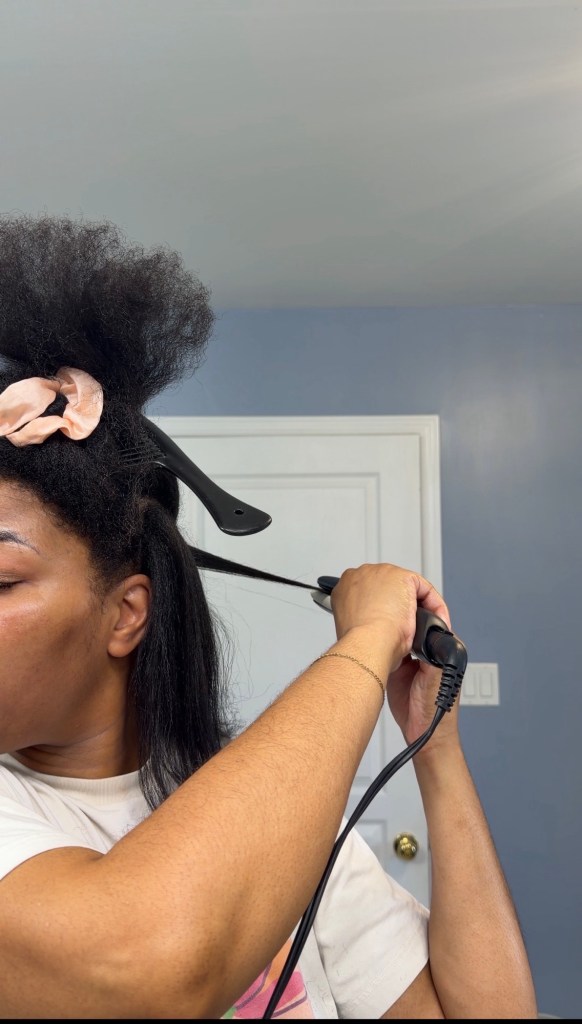
4. Work in Sections
Small sections allow heat to distribute evenly and reduce the need for repeated passes.
5. Use Low to Medium Heat
High heat should not be your default setting. Often, technique matters more than temperature.
6. Limit Passes
Repeatedly going over the same section increases the chance of damage.
7. Avoid Heat on Soaking Wet Hair
Hair should be damp, not dripping wet, before blow drying.
My Weekly Natural Hair Stretching Routine
Weekly stretching has honestly helped my natural hair so much. It keeps my hair manageable throughout the week and reduces tangling significantly.
One of my favorite products for this routine is the Marc Anthony Strictly Curls Ultimate Blowout Spray. Even though it is designed for curly hair, it works beautifully on coily natural hair as well. It helps soften my hair while giving me a smoother stretched finish without feeling weighed down.
What I love most is that my hair still feels like hair afterward — soft, touchable, and moisturized instead of dry and brittle.
I also use the AG Care 1989 Heat Protectant for additional heat protection. Layering protection gives me extra peace of mind, especially when I am consistently stretching my hair weekly.
To finish everything off, I apply the Olaplex No.7 Bonding Oil to seal in softness, add shine, and support healthier-looking ends.
This combination has made a huge difference in how my hair responds to heat.
Common Mistakes That Cause Heat Damage
If you are trying to maintain healthy natural hair while using heat, avoid these common mistakes:
Using Heat Daily
Constant heat exposure without recovery time weakens the hair over time.
Skipping Heat Protectant
This is one of the fastest ways to cause dryness and breakage.
Using Extremely High Temperatures
Higher heat does not guarantee better results.
Flat Ironing Dirty Hair
Buildup and oils can literally cook onto the hair shaft.
Ignoring Moisture
Dry hair is more vulnerable to heat damage.
Not Trimming Damaged Ends
Split ends continue traveling up the hair shaft if ignored.
Can Natural Hair Recover From Heat Damage?
Mild heat damage can sometimes improve with protein treatments, moisture balance, and reducing heat usage. However, severe heat damage often requires trimming.
This is why prevention matters so much.
Using proper heat protection from the start is easier than trying to repair damaged curls later.
Best Practices for Healthy Heat Styling on Natural Hair
If you want healthy natural hair while still enjoying stretched styles or silk presses, keep these practices in mind:
- Always use a heat protectant
- Use moderate temperatures
- Invest in quality tools
- Focus on moisture balance
- Deep condition consistently
- Avoid repeated heat passes
- Stretch hair gently
- Trim split ends regularly
- Listen to your hair
Natural hair can absolutely flourish with occasional heat when cared for properly.
Final Thoughts: Healthy Natural Hair and Heat Can Coexist
There is a lot of fear surrounding heat in the natural hair community, but heat itself is not automatically damaging. Healthy natural hair is about balance, protection, and technique.
With proper heat protection, quality tools, moisturizing products, and mindful styling habits, you can enjoy stretched styles while still maintaining healthy curls and coils.
For me, weekly stretching has become part of my length retention routine, and products like the Marc Anthony Strictly Curls Ultimate Blowout Spray, AG Care 1989 Heat Protectant, and Olaplex No.7 Bonding Oil have helped keep my hair soft, manageable, and protected throughout the process.
Your curls deserve protection. Your length deserves retention. And your natural hair journey deserves techniques that support healthy, thriving hair long term.
Frequently Asked Questions About Heat Protection and Natural Hair
Is heat bad for natural hair?
Heat is not automatically bad for natural hair. Damage usually happens from excessive temperatures, poor technique, or skipping heat protection.
How often can you safely use heat on natural hair?
It depends on your hair’s condition and routine, but many naturals safely use moderate heat weekly or biweekly with proper protection and moisture care.
What temperature is safest for natural hair?
Lower to medium temperatures are generally safest. Fine hair often requires less heat than thicker textures.
Can heat protectants really prevent damage?
Heat protectants help reduce damage significantly by creating a protective barrier and minimizing moisture loss, though no product can make heat completely damage-proof.
What is the best heat protectant for natural hair?
The best heat protectant depends on your hair needs, but I personally love the Marc Anthony Strictly Curls Ultimate Blowout Spray paired with AG Care 1989 Heat Protectant for extra protection and softness.


Leave a Reply