For many people with natural hair, heat styling is part of the routine. Whether it’s a silk press, a stretched blowout, or a sleek straight style, heat can give you versatility.
But the truth is, heat damage is one of the biggest fears in the natural hair community. One bad heat session can leave curls looser, limp, or permanently altered.
The good news? Heat styling doesn’t have to mean heat damage. With the right techniques and tools, you can protect your hair and still enjoy heat-styled looks.
Let’s talk about what heat damage actually is — and how to prevent it.
What Is Heat Damage?
Heat damage happens when high temperatures permanently alter the protein structure of your hair strands.
Your hair is made of keratin proteins. When heat is applied, the hydrogen bonds in your hair temporarily break so your hair can change shape (like when you straighten curls). When the hair gets wet again, these bonds usually reform and your curls return.
However, excessive heat or repeated heat styling can permanently damage the structure of the hair, causing curls to loosen or disappear.
Signs of heat damage include:
• Looser curls that don’t bounce back
• Straight pieces that stay straight after washing
• Increased breakage and dryness
• Split ends and thin strands
• Uneven curl patterns
For people with curly, coily, or natural hair, this can be especially frustrating because it can take months — or even years — to grow out.
Common Causes of Heat Damage
Most heat damage doesn’t happen from one silk press.
It usually happens from repeated habits that slowly weaken the hair.
The most common causes include:
1. Using Too Much Heat
Many heat tools go up to 450°F. That temperature is unnecessary for most hair types and increases the risk of damage.
2. Using Heat Too Frequently
Daily heat styling can gradually weaken the hair’s structure and lead to breakage.
3. Skipping Heat Protectant
Heat protectants create a barrier that reduces moisture loss and protects the hair shaft.
4. Poor Quality Heat Tools
Tools that heat unevenly or snag hair can cause mechanical damage and excessive heat exposure.
How to Protect Your Hair From Heat Damage
The goal is not to eliminate heat completely — it’s to use heat safely and intentionally.
Here are the best ways to protect your hair.
1. Always Use a Heat Protectant
Never skip this step.
Heat protectants create a protective layer around the hair strand that helps reduce moisture loss and friction.
Look for ingredients like:
• silicones
• keratin
• argan oil
• proteins
These ingredients help strengthen the hair while styling.
2. Start With Healthy, Hydrated Hair
Healthy hair handles heat much better.
Before heat styling:
• deep condition
• detangle thoroughly
• ensure hair is fully dry
Applying heat to damp hair can cause internal steam damage, which weakens the hair shaft.
3. Use the Lowest Effective Temperature
You don’t need extremely high temperatures to straighten your hair.
Start with the lowest heat setting that works for your hair type.
Fine hair: 250–300°F
Medium hair: 300–375°F
Coarse or textured hair: 375–410°F
4. Use High-Quality Heat Tools
One of the biggest differences between healthy heat styling and heat damage is the tool you’re using.
Low-quality tools often:
• heat unevenly
• require multiple passes
• pull on the hair
That combination leads to unnecessary damage.
A better option is a tool designed to minimize passes and distribute heat evenly.
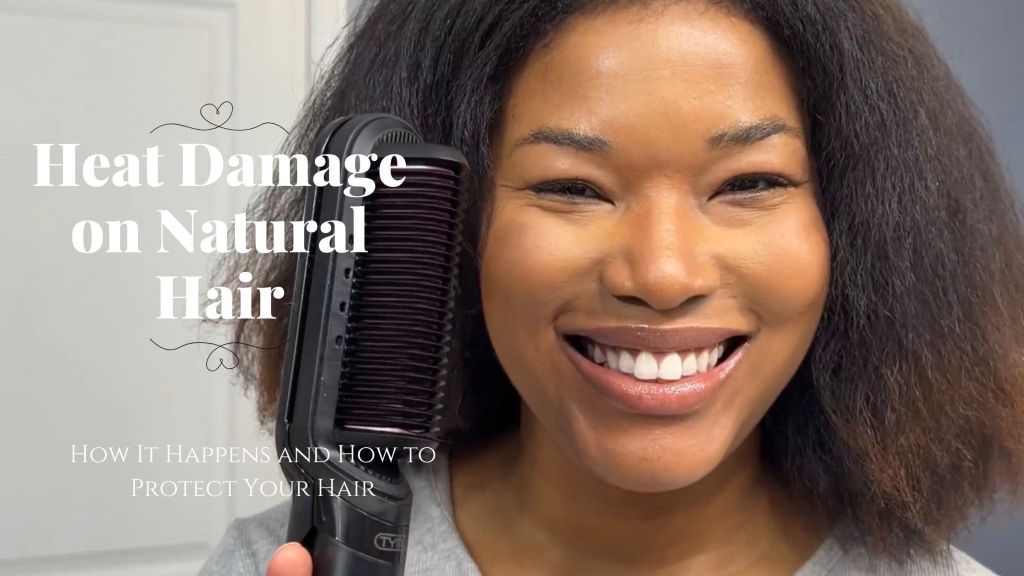
One option I recommend is the TYMO Flip Pro 2‑in‑1 Hair Straightening Comb.
This tool combines a flat iron and heated comb, which allows you to detangle and straighten in one step. It uses ceramic-coated comb teeth and releases negative ions to reduce frizz while helping hair stay smooth and shiny.
Some features that make it helpful for minimizing heat damage include:
• 2-in-1 comb and straightener design
• 200 million negative ions for smoother hair
• ceramic coating for even heat distribution
• 5 adjustable temperature settings (265–410°F)
• 30-second heat-up time
• anti-scald safety design
These features allow you to straighten hair more efficiently, meaning fewer passes and less overall heat exposure.
You can check it out here:
https://tymobeauty.com/?ref=nrtyfegh
Heat Styling Without Losing Your Curls
Many naturals avoid heat completely because they’re afraid of damage.
But the truth is, heat styling can be done safely when your hair is healthy and protected.
The key is:
• limit how often you use heat
• prep your hair properly
• use heat protectant
• use quality tools designed to reduce damage
When done correctly, heat styling should only temporarily change your hair’s shape — your curls should return once your hair is washed.
Final Thoughts
Heat damage isn’t inevitable.
Most of the time it comes from poor heat habits, repeated high temperatures, or low-quality tools.
With the right routine and the right tools, you can enjoy silk presses, blowouts, and sleek styles without sacrificing your natural curl pattern.
If you want a styling tool designed to reduce heat exposure while still giving smooth results, you can check out the TYMO Flip Pro here: https://tymobeauty.com/?ref=nrtyfegh


 Sandy Esprit
Leave a comment